
How do the police check for car insurance?

Do police check auto insurance? You must always provide proof of car insurance when you are pulled over, and police can check to see if your proof of insurance is valid.


secured lock Secured with SHA-256 Encryption

By clicking, you agree to our Terms of Use

Nationwide State Farm Allstate
AllstateState FarmNationwideLiberty MutualFarmers Insurance
Dorothea Hudson

Insurance and Finance Writer

Dorothea Hudson has been professionally writing in many spheres since 2013. She has written on entertainment, insurance, finance, travel, technology, AI, renewable energy, crypto, fundraising, and real estate for many websites. Her work has been published for British retailer Marks and Spencer, Kroger Magazine, the Vision Group, and more. Her passions include writing, music, running, travel, te...

Written by
Dorothea Hudson
Daniel Walker

Licensed Insurance Agent

Daniel Walker graduated with a BS in Administrative Management in 2005 and has run his family’s insurance agency, FCI Agency, for over 15 years (BBB A+). He is licensed as an insurance agent to write property and casualty insurance, including home, life, auto, umbrella, and dwelling fire insurance. He’s also been featured on sites like Reviews.com and Safeco. To ensure our content is accura...

Reviewed by
Daniel Walker

Updated October 2024

Anytime you drive a vehicle, you’re responsible for carrying your state’s minimum car insurance coverage. If you get pulled over, the police will want to verify your insurance and make sure you’re in compliance with state law. Typically, they’ll ask for your insurance card, but that’s not the only way they can check your insurance. 
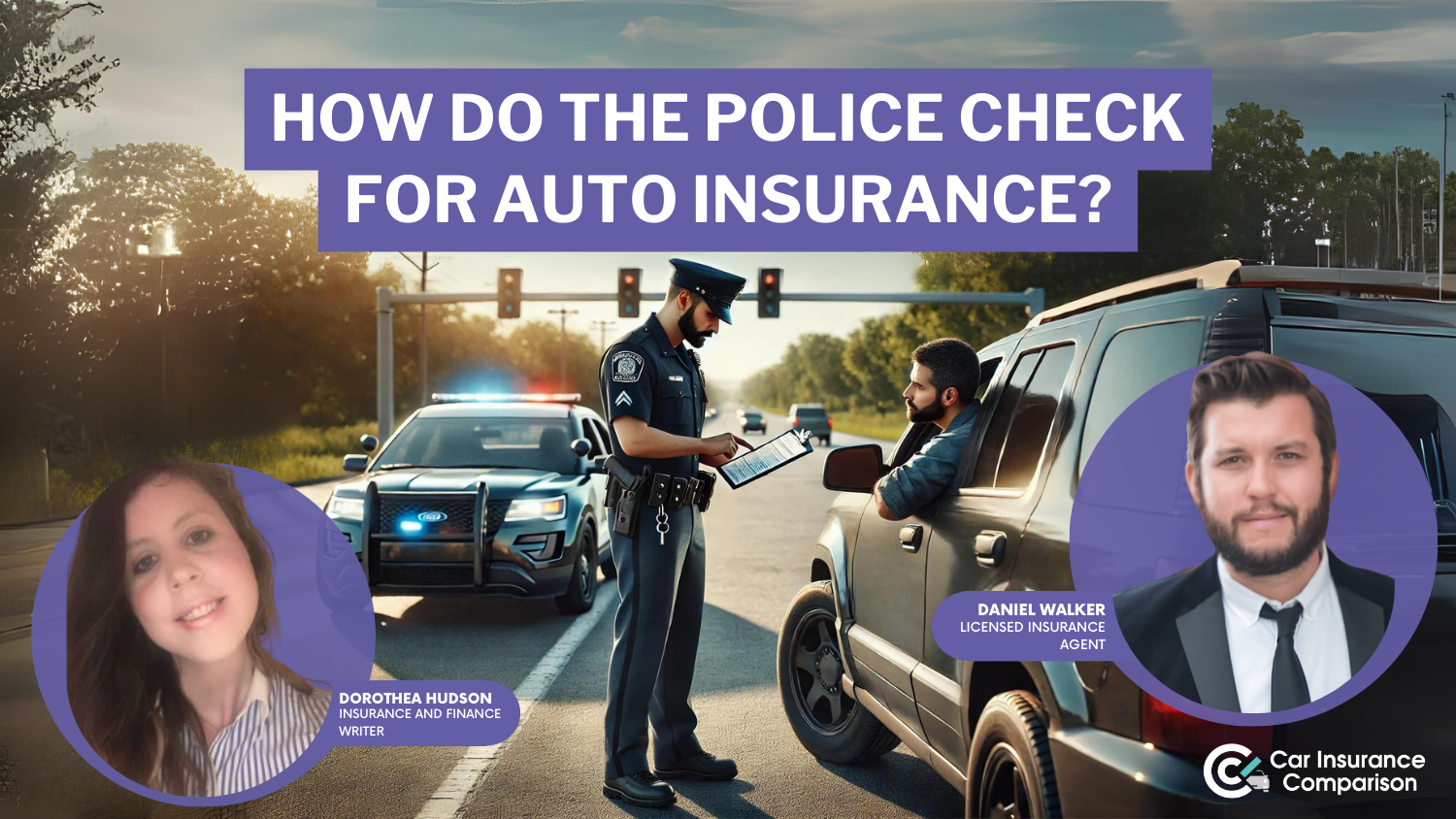
how do the police check for auto insurance?

Read on to find out more about why the police may want to verify your car insurance and what it means for you if you aren’t properly insured.

Here's what you need to know...

  • Car insurance is required by law in nearly every state
  • In states with mandatory insurance laws, you must present proof of liability or no-fault insurance coverage anytime you register your vehicle or are pulled over by law enforcement
  • With electronic verification systems, police officers can verify whether or not you have an active insurance policy that meets state requirements

Do police check auto insurance?

When they pull you over, police officers can verify with the state whether you have insurance and whether that insurance policy and coverage comply with the laws in your state. Likewise, if you have to file a police report for an accident, the officer will verify your insurance. (For more information, read our “Can car insurance companies check police records?“)

Anytime you are pulled over for a driving infraction, the police officer will ask for your license, vehicle registration, and proof of insurance. They will then verify the insurance to ensure your vehicle is adequately covered.

Free Insurance Comparison

Compare Quotes From Top Companies and Save

secured lock Secured with SHA-256 Encryption

By clicking, you agree to our Terms of Use

Nationwide State Farm Allstate

How Police Cars Tell If You Have Insurance

Police cars can tell if you have insurance through advanced technology. When you are pulled over, police can verify insurance using electronic systems linked to state databases. Cops check insurance details in real-time, ensuring compliance with state laws. This technology ensures that police cars tell if you have insurance and verifies its validity.

Special Considerations for Police Officers

Police officers often have unique requirements when it comes to auto insurance due to the nature of their job. Auto insurance for police officers can sometimes come with specialized coverage options that cater to the specific risks they face.

For instance, some policies may include enhanced coverage for high-speed pursuits or additional protection for law enforcement equipment in their vehicles. Police officers need to compare different policies to find the best car insurance for police officers that suits their needs

Many insurance providers offer cheap car insurance for police officers as a way to honor their service and ensure they are adequately protected both on and off duty.

How Police Verify Your Insurance

When you’re pulled over, the police have several methods to verify your insurance. Police check insurance status by asking for proof of insurance and can quickly confirm its validity through electronic verification systems.

Cops look up your insurance details by accessing the state’s Department of Motor Vehicles (DMV) database, which shows if your insurance policy is active. This system enables cops to verify insurance and see your insurance history, ensuring compliance with state laws.

Police can see what type of insurance you have and will check if your insurance is valid, ensuring that your coverage meets state requirements.

Consequences of Invalid or Lapsed Insurance

If you’re caught without valid insurance, the consequences can be severe. Cops check if you have insurance and can immediately see if your insurance is active or expired. Police verify insurance through their onboard computer systems, allowing them to know if your car is insured.

If a cop looks up your insurance and finds it invalid, you may face fines, license suspension, or even vehicle impoundment.

The police see your insurance details and can tell if you have no insurance, leading to potential legal trouble. It’s crucial to maintain valid insurance to avoid these consequences, as cops can know if you have insurance at any time.

How Police Verify Car Insurance

The police have various methods to ensure that you have valid car insurance when you’re pulled over. One primary method involves directly checking your insurance documentation. Typically, a police officer will ask for your insurance card, which includes all relevant details about your coverage.

This card provides initial proof of insurance, but the police can go further by using electronic systems to verify your insurance status. Cops can verify insurance through these systems, which are linked to state databases, ensuring that the policy you present is active and valid.

Police cars are now equipped with advanced technology that enables officers to quickly pull up your insurance details directly from the state’s Department of Motor Vehicles (DMV) database. This means that during traffic stops, cops pull up your insurance efficiently, ensuring compliance with state regulations and enhancing road safety.

When a cop sees if you have insurance, they can confirm not only the existence of your policy but also whether it meets state requirements.

This means that the police see if you have insurance through real-time checks, and cops can look up your insurance status with ease. If there are discrepancies or issues, such as an expired policy, a cop can tell if you have insurance that does not comply with legal standards.

In some cases, cops check your insurance by accessing electronic verification systems directly from their patrol cars. This capability allows cops to see if your insurance is active and whether your coverage meets state requirements.

If your insurance has lapsed or is otherwise invalid, the police know if your car is insured by checking these databases. This process helps ensure that drivers are held accountable for maintaining proper coverage, thereby reducing the risk of uninsured driving on the roads.

Ultimately, if you’re stopped by law enforcement, you should be prepared to provide proof of insurance and be aware that the police can check if your insurance is valid through their systems.

Cops can tell you if you have insurance or if there are any issues with your coverage. By maintaining up-to-date insurance and understanding these verification processes, you can avoid legal troubles and ensure compliance with state insurance laws.

Free Insurance Comparison

Compare Quotes From Top Companies and Save

secured lock Secured with SHA-256 Encryption

By clicking, you agree to our Terms of Use

Nationwide State Farm Allstate

Verify Your Car Insurance: What You Need to Know

When you’re pulled over, it’s essential to know that police officers have multiple ways to check if you have valid car insurance. Cops verify insurance by using both manual and electronic methods to ensure compliance with state regulations.

Typically, when you provide your insurance card, a police officer can tell if you have insurance by cross-referencing the information with state databases. This verification process is crucial for maintaining road safety and legal adherence.

Cops look up insurance details in real-time using electronic systems that are linked to the state’s Department of Motor Vehicles (DMV) database. This allows them to instantly see if your car is insured and confirm whether your coverage meets state requirements.

The system helps police see if you have car insurance and can even reveal if your insurance is expired. If there are discrepancies, such as an expired policy, police can tell you if your insurance is expired and issue penalties accordingly.

During a traffic stop or when handling an accident report, the police tell if a car is insured by verifying the provided insurance information against their database. Police check if you have insurance and can tell you if you have car insurance through their advanced electronic systems.

These systems ensure that police can know if you have insurance and can swiftly act if there are issues with your coverage. Additionally, the police tell you if you have insurance and provide you with detailed information on its status if needed.

In cases where the insurance status is unclear or questionable, police can check if insurance is valid using their onboard computer systems. This allows officers to see if your insurance is expired and determine if it’s valid at the time of the stop.

Understanding these verification processes helps ensure that you are always compliant with state insurance laws, avoiding potential legal trouble and ensuring that you have the proper coverage on the road.

What Happens When Cops Verify Your Insurance?

When you’re stopped by law enforcement, cops always ask for insurance as part of the routine check. They will typically ask for proof of insurance, which is usually in the form of your insurance card. This card contains essential information about your coverage and its validity.

The police know if you have insurance because they can verify it through several methods. Cops check for insurance status using electronic systems linked to the state’s Department of Motor Vehicles (DMV) database. This system allows them to quickly run your insurance details and confirm if your insurance is valid.

Cops run insurance cards to ensure that the policy you present is both active and meets state requirements. During a traffic stop or when handling an accident report, police check if insurance is valid by accessing real-time data from their onboard systems.

If there are any discrepancies or issues with the insurance information provided, such as an expired policy, the police tell if you have no insurance or if the insurance is not valid. This capability helps maintain road safety and compliance with state laws, as cops know if your insurance is valid and can swiftly address any problems that arise.

By running your insurance through their systems, cops can determine if you are driving with valid coverage. The police know you have insurance if your details match the state records, but if there’s an issue, such as expired coverage, the police know if you have insurance that does not comply with legal standards.

Understanding these verification processes can help you stay compliant with the law and avoid potential legal troubles related to insurance.

The Important Role of Police Verification

The role of police verification in maintaining road safety cannot be overstated. When you are pulled over, the primary task of a police officer is to ensure that all vehicles on the road comply with state insurance requirements. Cops ask for proof of insurance as a standard procedure during traffic stops.

If you present your insurance card, cops see your insurance and can quickly determine whether it meets the legal requirements. However, the process doesn’t end there. Cops run your insurance through electronic systems to verify its validity, ensuring that the policy you present is active and meets state regulations.

Beyond simply checking the insurance card, police have advanced tools to verify your coverage. Police look up insurance details in real-time by accessing state databases linked to the Department of Motor Vehicles (DMV). This allows them to see if your car is insured and if your insurance policy is current.

If there are any discrepancies, such as an expired policy, police can tell you if your insurance is expired immediately. This real-time data enables officers to enforce compliance effectively and address any issues on the spot.

The importance of this verification process is evident when considering the consequences of driving without proper insurance. If the police see if you have insurance and find that your coverage is invalid or lapsed, you may face significant legal repercussions.

Cops tell you if you have insurance and provide details about its status, ensuring that you understand any issues with your coverage. By maintaining up-to-date insurance and understanding these verification processes, drivers can avoid fines, license suspensions, and other penalties.

In summary, the role of police verification in enforcing car insurance laws is crucial for ensuring road safety and legal compliance. Cops verify insurance through a combination of manual checks and electronic systems, making it essential for drivers to maintain valid coverage at all times.

By understanding how police can tell if you have insurance and the importance of providing accurate documentation, you can better navigate the requirements and avoid potential legal trouble.

Free Insurance Comparison

Compare Quotes From Top Companies and Save

secured lock Secured with SHA-256 Encryption

By clicking, you agree to our Terms of Use

Nationwide State Farm Allstate

The Benefits of Police Verification for Car Insurance

The benefits of police verification for car insurance extend beyond mere compliance with state laws; they play a crucial role in maintaining road safety and ensuring drivers are adequately protected. When you are pulled over, cops ask for insurance as part of their routine check.

This initial request allows police officers to confirm that your vehicle has valid coverage. Through electronic systems linked to state databases, police can tell you if you have insurance and verify its validity. This process helps ensure that all drivers on the road meet the legal requirements for car insurance.

Cops know if you have insurance through real-time data from their onboard systems. These systems enable officers to quickly verify if your insurance policy is active and meets state standards.

By accessing your insurance details through the Department of Motor Vehicles (DMV) database, police see if your car is insured and can promptly address any discrepancies.

If there are issues such as an expired policy, police can tell you if your insurance is expired and issue appropriate penalties. This instant verification process helps maintain high standards of road safety and legal compliance.

The ability of police to check if your car is insured also benefits drivers by reducing the risk of uninsured driving. If an officer finds that your insurance is not valid or has lapsed, they can take immediate action, which may include issuing fines or impounding your vehicle.

Police check if your car is insured to ensure that drivers are responsible and protected. This verification helps prevent potential financial burdens and legal complications that could arise from driving without adequate coverage.

Overall, the rigorous methods employed by police to verify insurance—including the ability to run your insurance through state databases and check if your insurance is expired—provide essential benefits. They ensure that drivers are compliant with state laws and contribute to safer road conditions.

By understanding how police see if your car is insured and how they verify insurance status, drivers can maintain valid coverage and avoid the legal and financial consequences of being uninsured.

How Police Determine Your Insurance Status

When you are pulled over, police officers have several ways to determine if you have valid car insurance. Typically, a police officer will ask for insurance as part of the routine check. They will request to see your insurance card, which contains essential details about your coverage.

However, the process doesn’t stop at simply viewing your insurance card. Cops run your insurance through electronic systems that are connected to state databases. This allows them to verify your insurance status in real-time. If your insurance is not valid, the police see if your insurance is expired through these systems.

If there are any discrepancies, such as an expired policy, police tell you if your insurance is expired and inform you of the next steps. In some cases, police tell you if you have car insurance and confirm whether it meets state requirements.

The ability of the police to quickly tell if you have insurance or if there are issues with its validity ensures that all drivers maintain proper coverage and adhere to legal standards.

Why do the police check car insurance?

In almost every state (except for Virginia and New Hampshire), car insurance is required by law, and driving without car insurance can result in a fine. Specific coverage requirements vary by state, so it’s best to understand types of car insurance and determine what your state requires before purchasing an insurance policy. Plus, car insurance protects you from financial stress if you have a major accident.

Some states do not require a specific insurance policy, but they do have insurance requirements instead, such as:

  • Putting collateral down for “self-insurance” of your vehicle
  • Purchasing a surety bond (the state will determine the amount)
  • Depositing funds with your state treasurer as a security

Whatever the specific rules are in your state, an officer will be able to verify whether you’ve met the minimum requirements for financial responsibility. 

Read more: Alternatives to Car Insurance: Surety Bonds

Free Insurance Comparison

Compare Quotes From Top Companies and Save

secured lock Secured with SHA-256 Encryption

By clicking, you agree to our Terms of Use

Nationwide State Farm Allstate

How do police check auto insurance?

The police start by asking for proof of insurance from your insurance provider. This is usually the best way for you to prove your vehicle is insured. Your insurance card includes all relevant information, including your coverage details and expiration date. (For more information, read our “How do I check my car insurance expiration date?”).

However, the police can also check your policy information in your state’s department of motor vehicles (DMV) database to confirm your policy exists and is paid up. Each police car is equipped with a computer system that connects to an internal database. This system shows police officers your history, including any past cases in which you were caught without insurance.

Consequences of Driving Without Car Insurance

If you are caught driving without car insurance, there are a range of consequences. Here are some of the possible consequences of being caught without adequate, state-required car insurance:

  • Fines
  • Suspension of driving privileges
  • Appearance in court to justify your case to a judge
  • A misdemeanor conviction (especially for repeat offenders)
  • Your vehicle may be impounded
  • Jail time ranging from a few days to a year

The consequences can vary by state, depending on insurance requirements. For example, driving without car insurance in the state of Washington can lead to a fine of no more than $250, while other states can charge as much as $1,000. 

If you have been warned to register for insurance and fail to comply, you may face even harsher consequences. It can be a very costly risk if you choose to forego insurance on your vehicle in a state that requires it.

Will the police check for auto insurance?

If you get pulled over, the police will check for car insurance if you are in a state that requires it. Likewise, anytime an accident is reported, the police are required to verify your insurance and your license to fill out the accident report. To avoid the consequences of driving without insurance, you should look up the regulations in your state to be sure you are in compliance. 

Free Insurance Comparison

Compare Quotes From Top Companies and Save

secured lock Secured with SHA-256 Encryption

By clicking, you agree to our Terms of Use

Nationwide State Farm Allstate

Case Studies: Police Verification of Car Insurance

Case Study 1: Jane’s Valid Insurance

Jane was pulled over for a minor traffic violation. When asked, she provided her insurance card as proof of coverage. The police officer verified the information on the card and confirmed that Jane’s car insurance was valid and in compliance with state laws. Jane was able to continue her journey without any further issues.

Case Study 2: Mark’s Lapsed Insurance

Mark was involved in a car accident and had to file a police report. The officer investigating the accident requested Mark’s insurance information. However, when the officer checked the state’s Department of Motor Vehicles (DMV) database, it showed that Mark’s insurance policy had lapsed. As a result, Mark faced consequences for driving without insurance, including fines and possible license suspension.

Case Study 3: Sarah’s Fake Insurance

Sarah was pulled over by the police for speeding. She provided an insurance card that appeared to be legitimate. However, upon further verification, the officer discovered that the insurance policy was fake and not recognized by the state. Sarah was charged with driving without valid insurance and faced legal penalties as a result.

Summary: How Police Verify Your Car Insurance

When you are pulled over, a police officer can tell if you have insurance through several methods. Police ask for insurance documentation, typically your insurance card, which provides initial proof of coverage.

When police ask for insurance, they run your policy through electronic systems linked to the Department of Motor Vehicles (DMV) database. This process ensures that your insurance policy is valid and meets state requirements. This real-time verification helps police determine if your insurance is active.

If there are issues with your coverage, such as an expired policy, cops tell you if your insurance is expired through their verification systems.

Ensuring you follow these procedures is crucial for keeping your insurance valid and complying with state laws. This helps you avoid potential fines or legal issues related to driving without adequate coverage.

Additionally, it’s important to be aware that police run your insurance to verify its validity during traffic stops, so maintaining proper coverage is essential to avoid complications.

Frequently Asked Questions

Will the police check for auto insurance?

Yes, the police will check for auto insurance during traffic stops or when an accident is reported to ensure compliance with state requirements.

What are the consequences of driving without car insurance?

Consequences of driving without car insurance can include fines, license suspension, court appearances, misdemeanor convictions, vehicle impoundment, and possible jail time, depending on the state.

How do police check auto insurance?

Police can check auto insurance by asking for proof of insurance or by accessing the state’s DMV database to verify the existence and validity of the policy.

Why do the police check car insurance?

Police check car insurance to ensure compliance with state laws and to protect drivers from financial stress in case of accidents.

Do police check auto insurance?

Yes, police officers can check auto insurance to ensure compliance with state laws and verify if drivers have the required coverage.

How do the police check for car insurance?

The police can check for car insurance by asking for proof of insurance, such as an insurance card, or by verifying the information in the state’s DMV database.

Can cops see if you have insurance?

Yes, cops can see if you have insurance. During a traffic stop, they can verify your insurance status by checking your insurance card and accessing electronic systems linked to state databases. This allows them to confirm whether your insurance policy is active and meets state requirements.

Can police look up your insurance?

Yes, police can look up your insurance. They use electronic verification systems connected to the Department of Motor Vehicles (DMV) database to quickly access and verify your insurance details. This process ensures that the insurance policy you present is valid and complies with state laws.

Why do cops ask for proof of insurance?

Cops ask for proof of insurance to ensure that all vehicles on the road are covered as required by state law. Proof of insurance, usually in the form of an insurance card, verifies that you have the minimum required coverage. This helps maintain road safety and legal compliance.

Can a cop know if you have insurance?

Yes, a cop can know if you have insurance. They can check your insurance status by examining your insurance card and running your policy information through electronic systems that access the DMV database. This helps them determine if your insurance is valid and active.

More FAQs

Get a FREE Quote in Minutes

Insurance rates change constantly — we help you stay ahead by making it easy to compare top options and save.

secured lock Secured with SHA-256 Encryption

By clicking, you agree to our Terms of Use

Nationwide State Farm Allstate
State FarmLiberty MutualAllstateFarmers Insurance